
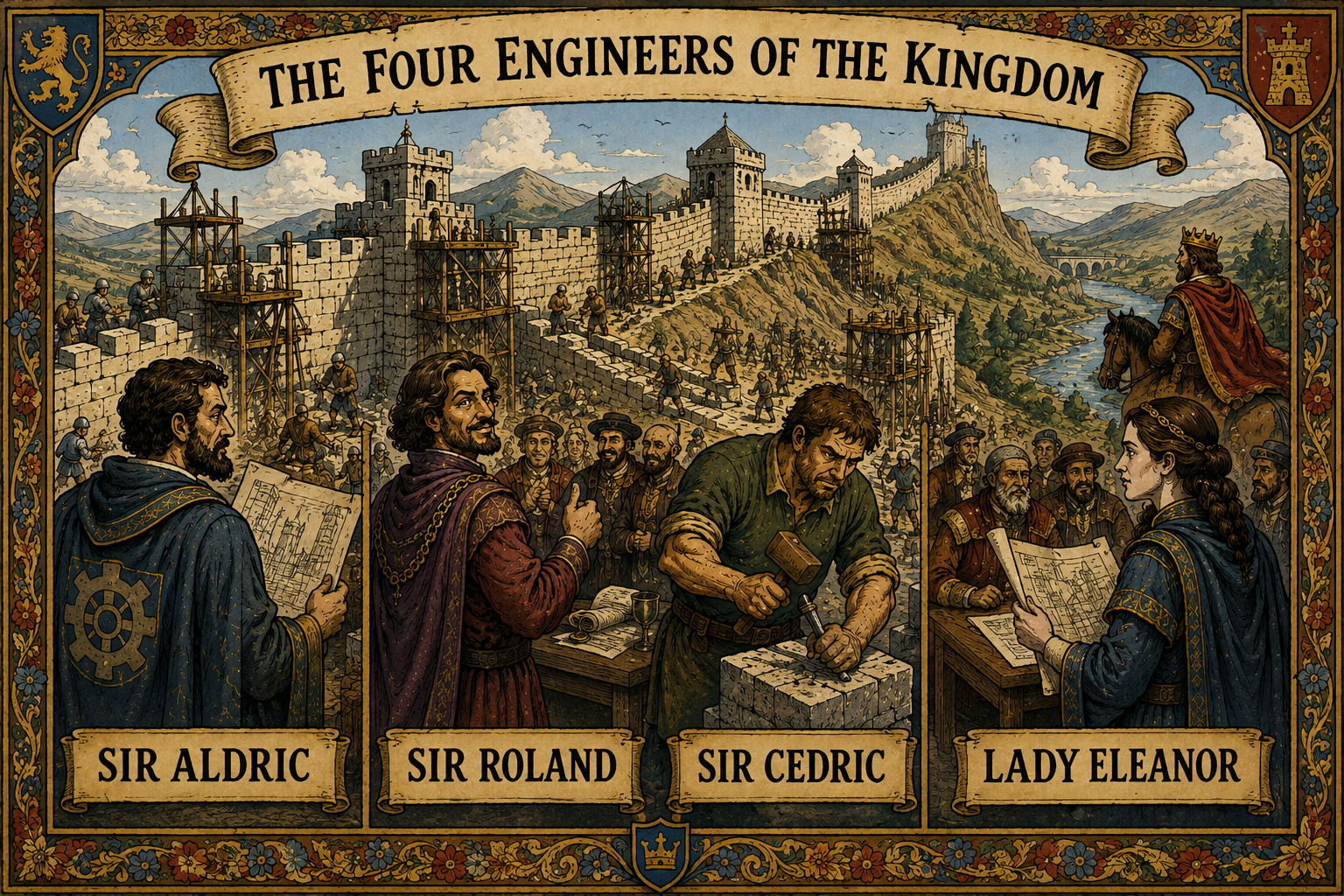
The Four Engineers of the Kingdom
The king gathered his ministers and asked them to build a wall that would protect the kingdom from its enemies:
— Build me a Great Wall that will protect our kingdom.
Wanting to impress the king, the ministers hired the greatest engineer in the realm: Sir Aldric. His castles had never fallen, his bridges had endured for generations, and his name had become synonymous with excellence.
Each minister had a different vision for the wall. One wanted towering watchtowers, another magnificent gates, another intricate carvings celebrating the king’s victories. Sir Aldric carefully noted every request, disappeared, and wasn’t heard from again for two months.
Then, one morning, a messenger arrived at the palace:
— Sir Aldric requests the king’s presence. The Great Wall is complete.
The ministers could hardly believe it. Two months of silence, and the greatest construction project in the kingdom was finished.
When the king rode north to inspect it, he found a masterpiece. The wall was magnificent—taller, stronger and more beautiful than anyone had imagined.
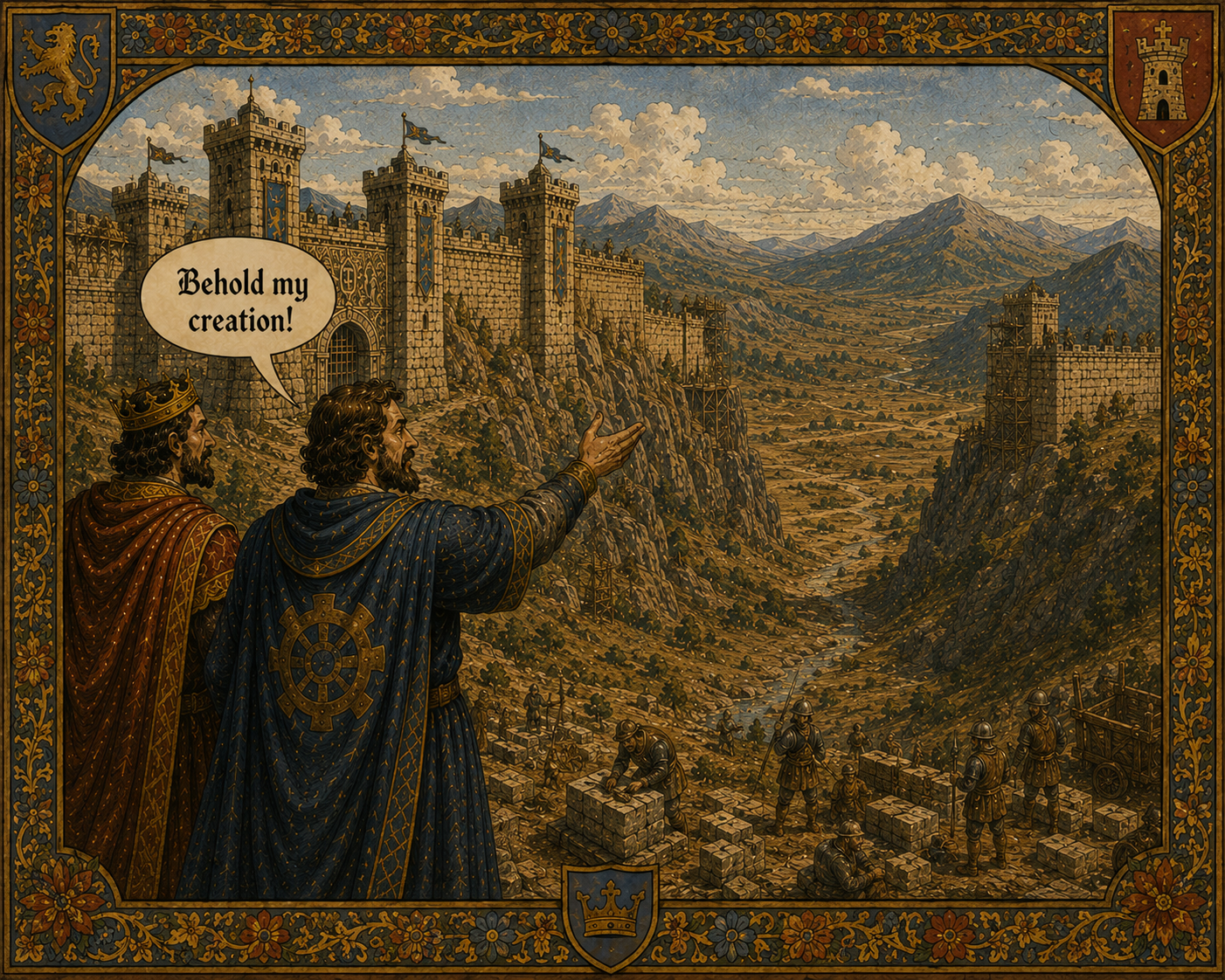
As he admired the craftsmanship, however, he noticed a nearby valley that the wall never covered. Turning to Sir Aldric, he asked how an invading army was supposed to be stopped.
Sir Aldric simply shrugged:
— No one told me the wall was supposed to defend the kingdom.
Embarrassed, the ministers decided that technical brilliance alone was clearly not enough.
This time they appointed Sir Roland.
Sir Roland knew everyone at court. He dined with the king, charmed the ministers, and always seemed to have the right answer. Whenever the king asked about the wall, he smiled confidently:
— Everything is progressing splendidly, Your Majesty.
Everyone believed him.
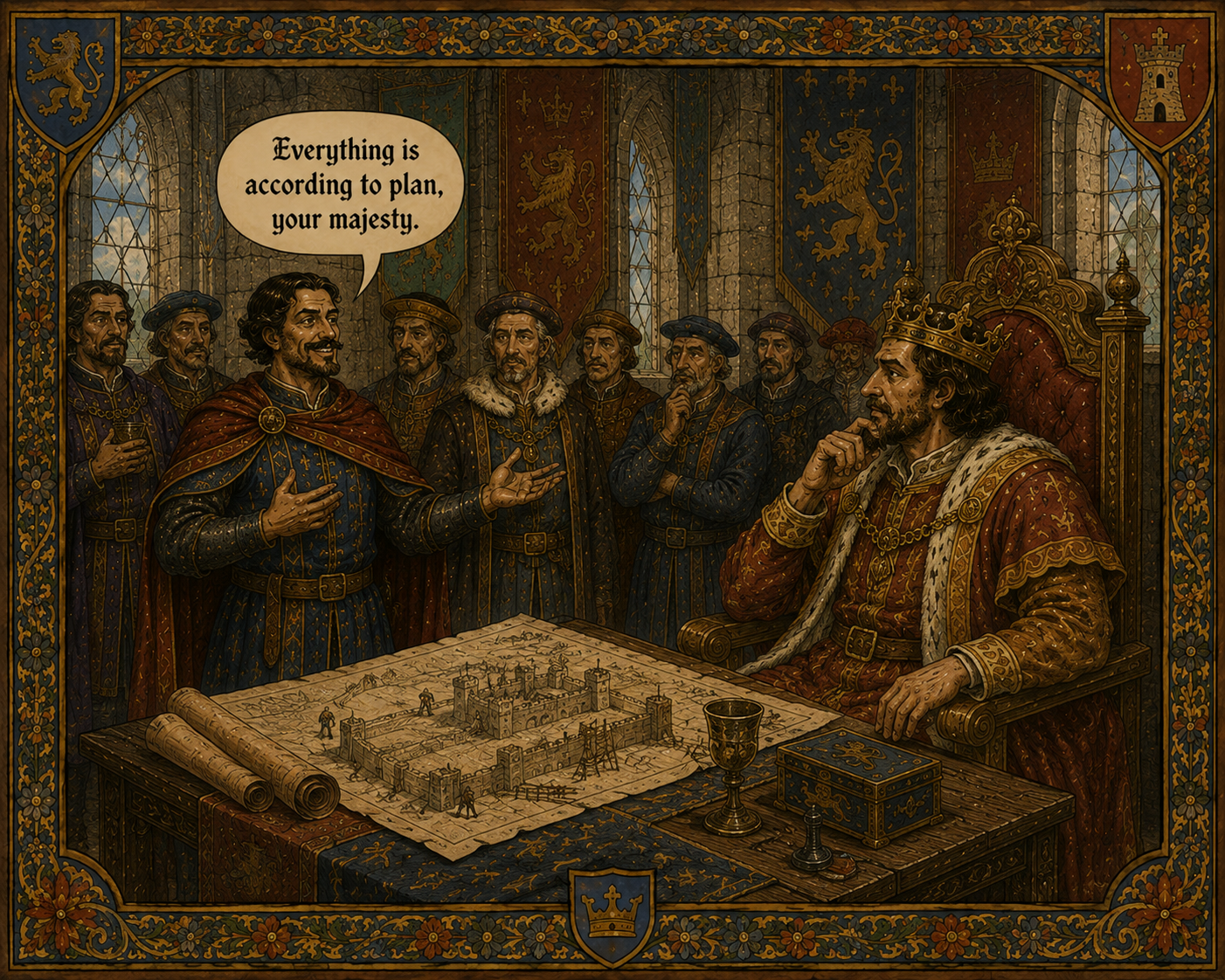
Then, on the day the king rode north to inspect the finished wall, there was no wall.
Sir Roland had quietly left the capital weeks earlier, leaving behind little more than promises and beautifully written progress reports.
Determined not to repeat the same mistake, the ministers concluded they simply needed to stay closer to the work.
They appointed Sir Cedric, a tireless engineer whose dedication was beyond question. This time the ministers visited the construction site every week. At first they offered advice, but soon they offered instructions.
One minister wanted the wall taller. Another wanted it cheaper. The General demanded more watchtowers. The Treasurer ordered fewer. Every week the plans changed, and every morning Sir Cedric faithfully adapted them.
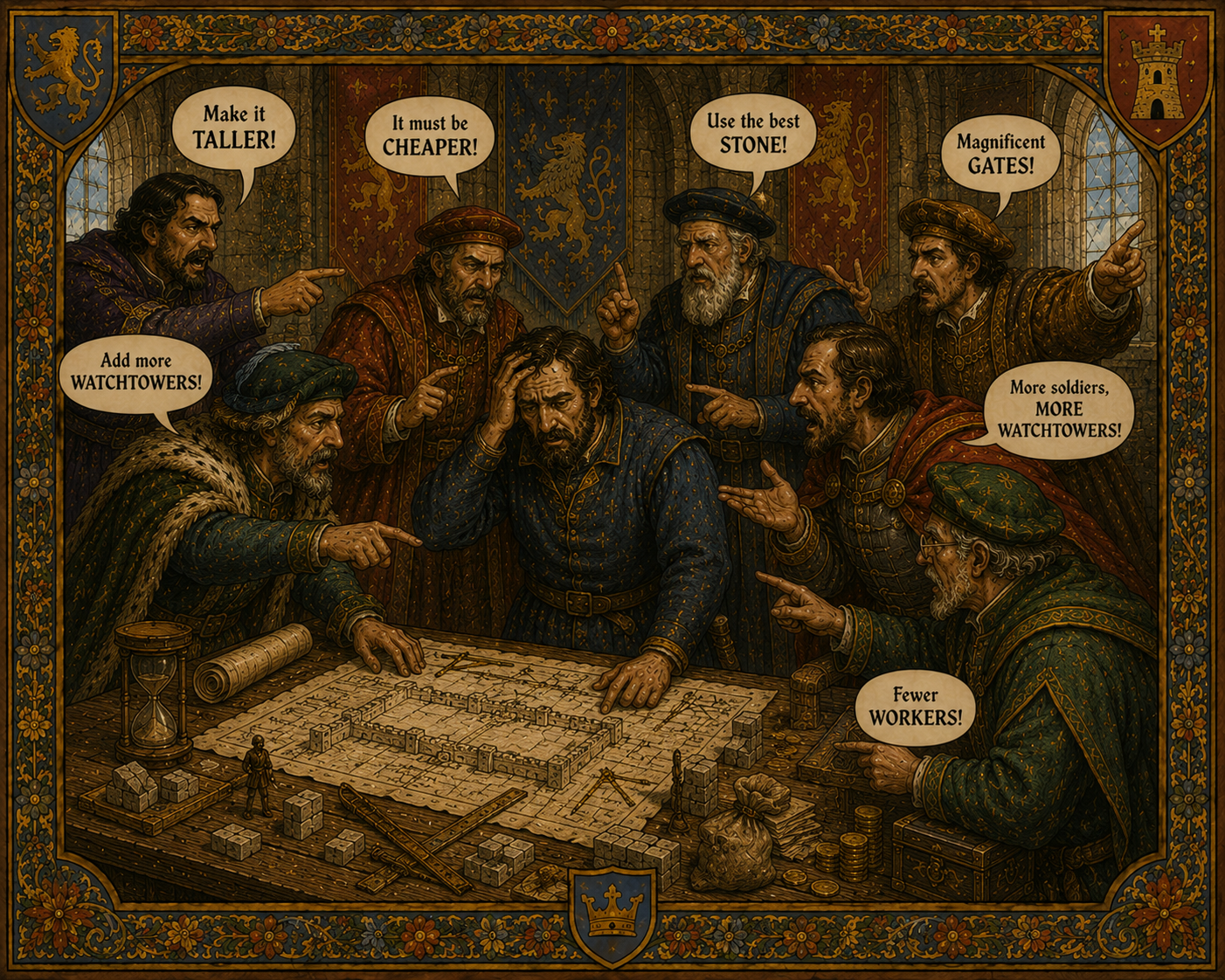
Months later the wall was finally complete. The king approached to inspect the work, but as he leaned against it, a section collapsed into rubble. The wall had become a patchwork of compromises, with every part built to satisfy a different vision.
After three failed attempts, the ministers appointed one final engineer: Lady Eleanor.
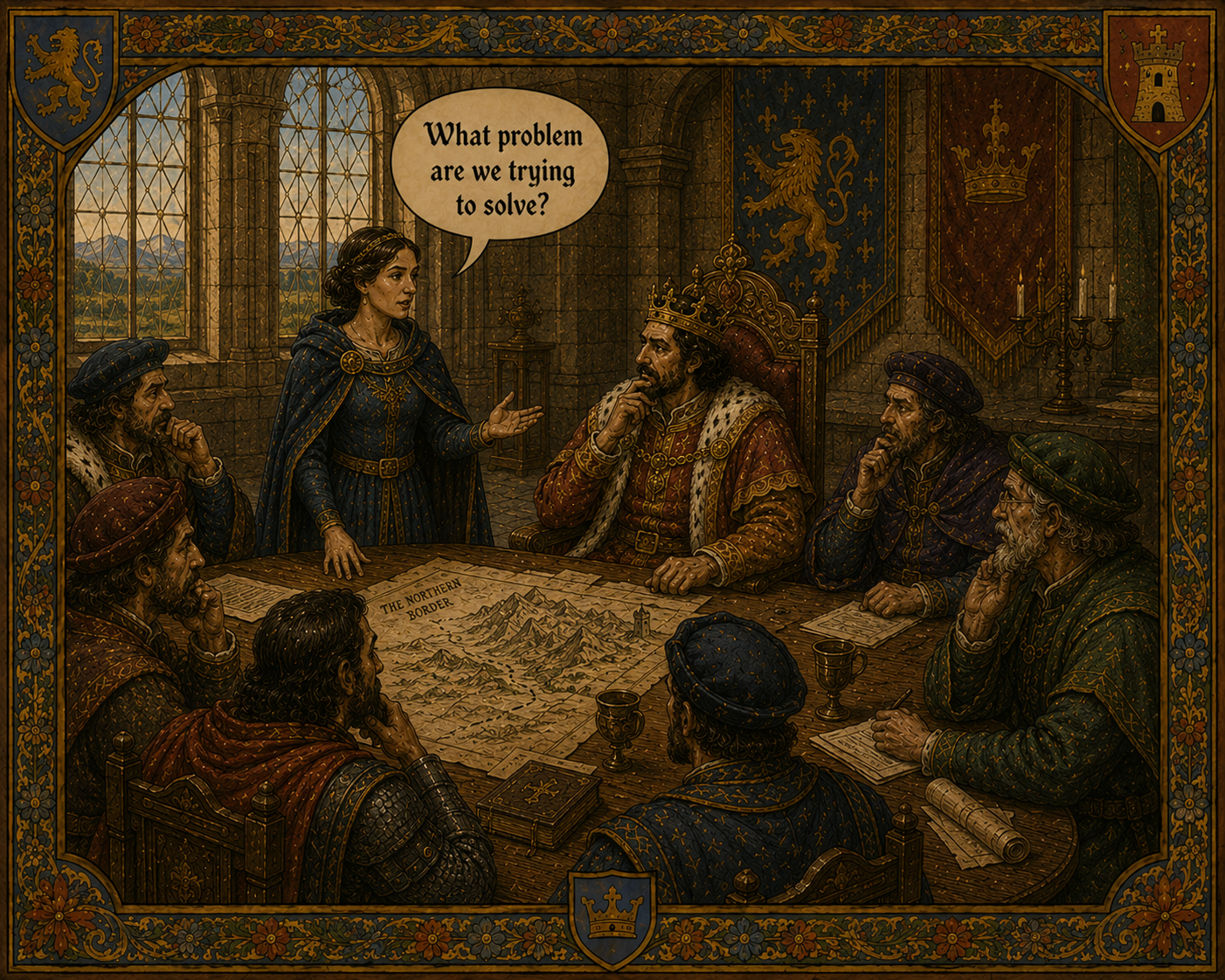
To everyone’s surprise, she didn’t ask for stone, timber or workers. Instead, she asked for meetings.
For days she spoke with the king, the ministers, the generals and the guards who patrolled the northern border. She asked where previous invasions had come from, what the kingdom feared most, what trade-offs they were willing to make, and, most importantly, how they would know the project had succeeded.
Eventually the ministers grew impatient:
— When will construction begin?
Lady Eleanor smiled:
— It already has.
Only once everyone agreed on a single objective did she gather her engineers. The plans were clear, priorities no longer changed, and every stone served the same purpose. The wall she built wasn’t the tallest or the most beautiful, but when the king returned to inspect it, he found exactly what he had asked for: a wall capable of protecting the kingdom.
Looking back, none of the first three engineers were incompetent.
Sir Aldric possessed extraordinary talent.
Sir Roland understood people.
Sir Cedric worked harder than anyone else.
Yet each failed because they optimized for only one dimension of leadership.
Lady Eleanor succeeded because she understood that before engineers can build systems, they must first align people around a system worth building.
Perhaps royal courts weren’t so different from modern engineering organizations after all. Kings have become CEOs, ministers have become managers, and castles have become software systems. The technology has changed, but the challenge remains the same: getting talented people with different priorities to move in the same direction.
Technical skill and hard work remain the foundation of great engineering. But as organizations grow, the engineers who create the greatest impact are those who can combine technical excellence with the ability to build alignment, navigate competing priorities, and help others rally behind a common goal.
In the end, Lady Eleanor’s greatest achievement wasn’t the wall.
It was ensuring that everyone was building the same one.